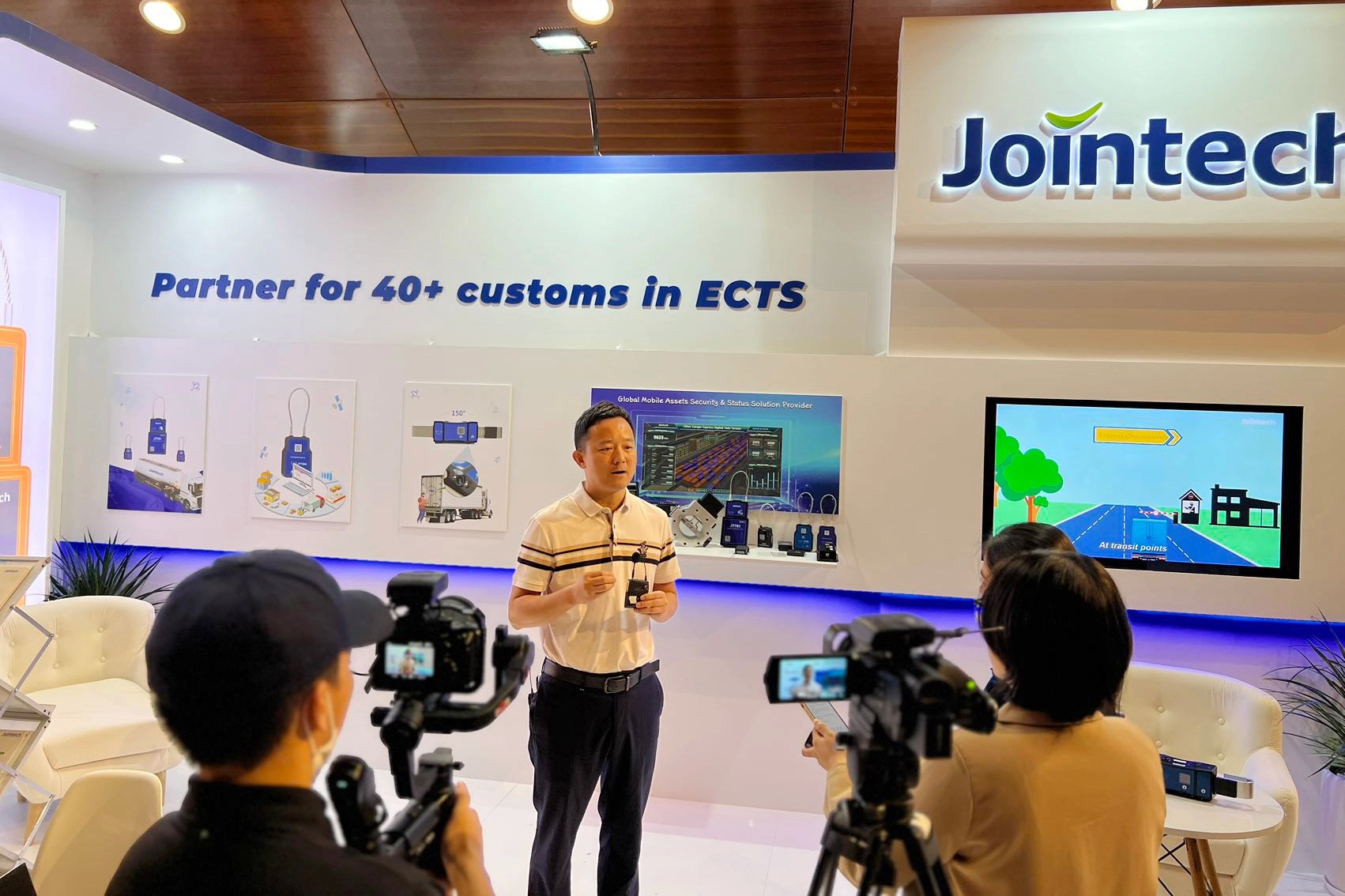
Collaboration axée sur les politiques : de la demande réglementaire au partenariat stratégique
Face à l'expansion rapide du commerce transfrontalier, le Vietnam a pris des mesures proactives pour renforcer la surveillance des marchandises pendant le transit. En 2018, le Département général des douanes vietnamiennes a introduit la décision 2031/QD-TCHQ, une réglementation historique exigeant une surveillance par GPS de toutes les marchandises conteneurisées sous les régimes d'importation, d'exportation, de transit et d'importation-réexportation temporaire.
Cette politique a marqué le passage d’une supervision traditionnelle et fragmentée à un système national unifié et axé sur la technologie. Dans ce contexte, JOINTECH est apparu comme un partenaire technologique clé, apportant son expertise éprouvée en matière de serrures électroniques intelligentes et de solutions de supervision douanière basées sur l'IoT pour soutenir la transformation numérique du Vietnam.

Solution Smart Lock : transformer la politique en technologie exploitable
Pour répondre aux exigences réglementaires, JOINTECH a déployé sa serrure électronique intelligente JT701, permettant aux autorités douanières d'avoir un contrôle et une visibilité total sur les mouvements de marchandises.
Transparence des transports en temps réel
Chaque conteneur est équipé d'une serrure intelligente capable de transmettre en continu des informations de localisation, de trajectoire de mouvement et d'arrêt à la plateforme douanière centrale, garantissant ainsi une traçabilité complète du processus.
Mécanisme actif de détection des risques
Le système détecte automatiquement les anomalies telles qu'un déverrouillage non autorisé, une altération du sceau, une déviation d'itinéraire ou un temps d'arrêt excessif. Une fois déclenchées, les alertes sont instantanément envoyées au centre de contrôle douanier, permettant une réponse rapide et minimisant les risques potentiels.
Prise en charge d'infrastructures évolutives
Depuis le lancement du projet, plus de 7 200 appareils ont été déployés dans tout le pays, constituant une base matérielle solide pour le réseau de supervision numérique du Vietnam.
Du projet pilote à l’adoption à l’échelle nationale : une voie de mise en œuvre éprouvée
La coopération entre JOINTECH et les douanes vietnamiennes a suivi une stratégie de déploiement structurée, étape par étape.
Phase pilote initiale
Les premiers déploiements ont été concentrés dans des centres logistiques clés tels que Haiphong et Quang Ninh. Ces régions ont servi de terrain d'essai pour valider les performances du système dans des conditions opérationnelles réelles.
Expansion nationale progressive
Suite aux résultats positifs du projet pilote, la solution a été étendue aux principales régions économiques et frontalières, notamment Hô Chi Minh-Ville, Hanoï, Lang Son, Da Nang, Vung Tau et Quang Tri. Ce marché à grande échelle reflète la fiabilité du système et la confiance des autorités douanières dans son efficacité.
Optimisation continue : informations tirées des opérations à long terme
En 2023, après plusieurs années de fonctionnement stable du système, JOINTECH et les douanes vietnamiennes se sont réunis à nouveau lors de la conférence technologique de l'Organisation mondiale des douanes (OMD) pour examiner les progrès et explorer les futures mises à niveau.
Examen opérationnel et boucle de rétroaction
Les deux parties ont procédé à une évaluation complète des performances du système, en se concentrant sur la stabilité et l'efficacité à long terme dans divers environnements logistiques.
Améliorations localisées
Les agents de première ligne ont fourni des commentaires pratiques sur des défis tels que l'interférence des signaux sur des terrains complexes et l'endurance des appareils. Ces informations ont directement contribué à l’amélioration des produits et à l’optimisation du système.
Explorer les capacités de nouvelle génération
Les discussions ont également porté sur l'intégration de technologies avancées telles que l'inspection visuelle basée sur l'IA, visant à renforcer davantage l'automatisation et l'intelligence dans la surveillance douanière.
Impact mesurable : Renforcer la sécurité et l’efficacité commerciale
Au cours de sept années de mise en œuvre, le projet a apporté des avantages tangibles à toutes les parties prenantes.
Pour les autorités douanières
- Mise en place d'un cadre national de supervision du numérique
- Réduction de la charge de travail d’inspection manuelle et des coûts d’application
- Angles morts minimisés dans la surveillance du fret
- Capacité renforcée de lutte contre la contrebande et la fraude
Pour les entreprises de logistique et de commerce
- Transport de marchandises sécurisé et conforme
- Réduction des inspections et des retards inutiles
- Amélioration de l’efficacité globale du dédouanement
Pour l'écosystème
Cette collaboration constitue un cas de référence sur la manière dont les retours d’information politiques, technologiques et opérationnels peuvent être intégrés efficacement pour conduire la transformation numérique au niveau national.
Regard vers l’avenir : progresser vers un commerce mondial plus intelligent
Avec plus de 7 200 appareils en service et des années d'expérience accumulée, JOINTECH continuera d'approfondir sa coopération avec les douanes vietnamiennes tout en élargissant sa présence à l'échelle mondiale.
En intégrant l'IoT, le Big Data et l'intelligence artificielle dans les flux de travail douaniers, JOINTECH vise à aider davantage de pays à créer des systèmes de supervision intelligents, efficaces et sécurisés, contribuant ainsi à l'avenir de la facilitation du commerce mondial.


 Votre message doit contenir entre 20 et 3 000 caractères!